Your Cart is Empty

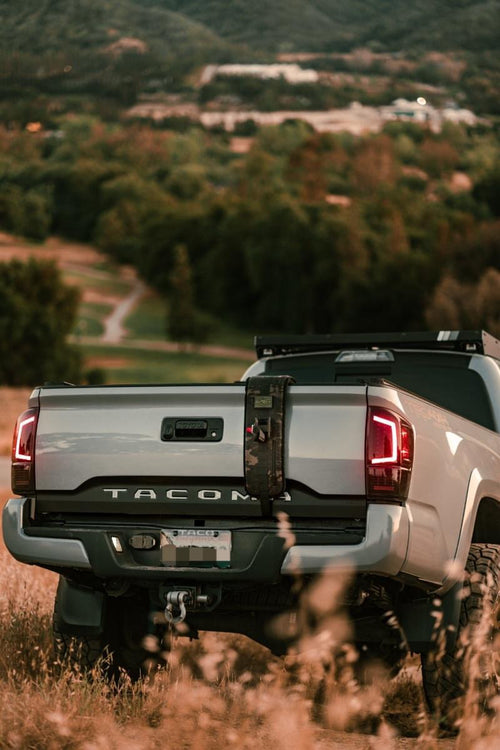

Look at this trailhead. Tacoma with a camper shell. F-150 next to it. BMW X5 on the end. And bolted to the back of almost every single one — a hitch rack sticking out into the parking lot like an apology for not thinking it through.
This is Central Oregon. Bend trails. Misty morning, gravel lot, probably 40 cars deep by 9am. And these guys have added 18 inches of steel and exposed bike to the back of their vehicle for everyone else to navigate around.
You Paid How Much for That?
A quality hitch rack runs $300 to $800. Sometimes more. For that money you get a platform that extends your vehicle's footprint by a foot and a half, blocks your backup camera entirely, covers your license plate on most states' legal limit, eliminates your hitch for any other use, and hangs your bike — the one you paid $4,000 for — directly into traffic at bumper height.
No foam between your frame and the rack arms. No fork control. No handlebar strap. Just your bike clamped by the frame and swinging in the slipstream of every semi you pass on the highway at 75 miles an hour.
But hey, it folds up when you're not using it. Mostly.
The Trailhead Math Nobody Does
Pull into a crowded gravel lot with a hitch rack and you've just added 18 inches to the back of your vehicle that didn't exist when you pulled in. You can't see it on your camera because the rack blocked it. You can't feel it because it's behind the bumper sensor range on most trucks. And the person parked behind you — who arrived after you and left a normal amount of space — is now getting their door dinged by your rear derailleur every time the wind shifts.
In a tight trailhead like this one, a hitch rack isn't a gear choice. It's an inconvenience tax you're charging everyone around you.
What Your Hitch Is Actually For
Your hitch is a recovery point. A trailer connection. A receiver for a bike rack when you don't have a truck bed — which, if you're reading this, you do. You have a truck. You have a bed. You have a tailgate. The problem was never where to put the bike. The problem was how to secure it there without scratching everything.
That's a solved problem. It's called the Bomber Strap. It attaches to your tailgate in 30 seconds, locks your fork in 15, locks your bars in 15, and keeps your bike protected at every contact point for the entire drive. Your hitch stays open. Your camera stays clear. Your footprint stays exactly the size of your truck.
The Comparison Nobody Wants to Hear
Hitch rack: $400 minimum, adds 18 inches to your vehicle, blocks your camera, eliminates your hitch, exposes your bike to traffic, requires tools or a lever to fold, and looks like a construction site attachment on an otherwise clean build.
Bomber Strap: attaches in 30 seconds, stores in a stuff sack, keeps your hitch open, keeps your camera clear, protects your gate and your bike, and disappears into your cab the moment you don't need it.
One of these is a gear flex. The other is a gear choice. They're not the same thing.
At the Trailhead
The Bomber Strap riders reversed in with full camera visibility. Unclipped in under a minute. Bikes on the ground, strap in the cab, trucks parked clean with zero extra footprint. They were on the trail before the hitch rack crowd finished arguing about whether to fold the platform up or leave it down.
Nobody tripped over anything. Nobody got their car door caught on a rear derailleur. Nobody backed into a log barrier they couldn't see because their camera was blocked.
Just trucks parked like trucks. Bikes on the trail where they belong.